
Phillips 66 will convert SF refinery to biofuels, close Santa Maria facility
The Phillips 66 Rodeo Renewed project would produce 680 million gallons annually of renewable diesel, renewable gasoline, and sustainable jet fuel. Combined with the production of renewable fuels from an existing project in development, the plant would produce greater than 800 million gallons a year of renewable fuels, making it the world’s largest facility of its kind.
160 jobs lost
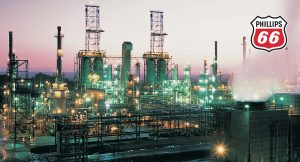 Because the SF plant is supplied by the Phillips 66 Santa Maria refinery, connected by a 200 mile oil pipeline, the Santa Maria refinery that sends oil north as well as the pipeline will each be retired in 2023, the company said.
Oil trains that connect the Santa Mara facility with the SF refinery will also end service. Some 110 employees work at the Santa Maria plant along with 50 contract employees.The company has said they have a $43 million payroll at the site.
“Phillips 66 is taking a significant step with RodeoRenewed to support demand for renewable fuels and help California meet its low carbon objectives,” said Greg Garland, chairman and CEO of Phillips 66. “We believe the world will require a mix of fuels to meet the growing need for affordable energy, and the renewable fuels from RodeoRenewed will be an important part of that mix. This project is a great example of how Phillips 66 is making investments in the energy transition that will create long term value for our shareholders.”
If approved by Contra Costa County officials and the Bay Area Air Quality Management District, renewable fuels production is expected to begin in early 2024. Once reconfigured, the plant will no longer transport or process crude oil.
The plant is expected to employ more than 400 jobs and up to 500 construction jobs, using local union labor, including the Contra Costa County Building & Construction Trades.
Phillips 66s also announced plans to shut down the Rodeo Carbon Plant and Santa Maria refining facility in Arroyo Grande, California, in 2023.
The refinery processes a mixture of heavy, high-sulfur and light sweet crude oils. It receives California crude oil by pipeline and both domestic and foreign crude oils by tanker. Semi-refined products from Santa Maria are sent by pipeline to Rodeo for upgrading into finished petroleum products. A large portion of the refinery’s production is transportation fuel such as gasoline and diesel.
Process facilities include coking, hydrocracking, hydrotreating and naphtha reforming units. The refinery produces CARB-grade gasoline and diesel fuels. The majority of refined products are distributed by pipeline, railcar and barge to customers in California.
The Santa Maria refinery sits on 1750 acres on the Nipomo Mesa.It was built in 1955. There are no plans to convert the Sant Maria plant. “Once the facility is idled, the units will be cleaned and shut down” company spokesman Joe Gannon says.