
-May 29,2020-
Walnut acres up
 USDA says California’s 2019 walnut acreage is estimated at 415,000 acres, up 3.8 percent from 2017. Of the total acreage, 365,000 were bearing and 50,000 were non-bearing.It is difficult for USDA, NASS to detect growers that are planting walnuts for the first time. The detailed data reflects tree removals from over 15,000 acres during the past two years. Of this number, some acreage was harvested in 2019 prior to being pulled out, and that acreage has already been removed from the detailed data.
Of the walnut acreage reported, Chandler continues as the leading variety with 133,609 bearing acres. Tulare overtook Hartley for second place with 29,331 bearing acres.
San Joaquin County shows the largest acreage with 14 percent of the total, followed by Butte with 13 percent and Tulare with 10 percent each.
2020 prices down
Last year’s walnut crop prices were up 40% from the previous season says USDA with an average annual price of $1,970 per ton. But in 2020 prices are lower again reported at about $0.75cents/lb – down from $1.20 last fall.
Almond prices take a hit
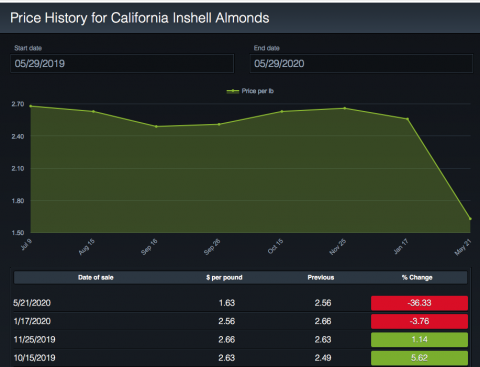
Almond prices are down as of May 2020 with a larger crop in 19/20 and export demand not as strong. A MarketWatch report earlier this year predicted the scenario for California growers this year. May 2020 prices according to the Merlo Group have dropped from $2.66/lb last fall to $1.63 this month. Almonds were the number two most valuable crop in California at $6 billion in 2019 – behind milk at $7 billion. Here is the MarketWatch report from March.
The spread of the novel coronavirus across China has slowed shipments into Chinese ports — and that could soon make products like almond milk cheaper for U.S. consumers, experts told MarketWatch.
As the second-biggest buyer of California almonds, China purchased more than 100 million pounds last year. With fewer workers in China available to retrieve shipments from the select number of ports that are still open, almond growers in the U.S. may soon have an almond surplus on their hands, which could lead to lower retail prices for U.S. shoppers, two experts told MarketWatch.
Some 80% of the almonds consumed around the world are produced in California. Last May, the U.S. Department of Agriculture predicted that the U.S. would grow 2.5 billion pounds of almonds this year — the biggest-ever harvest for a single year, up nearly 9% from last year. Producers appear to be on track to meet the USDA’s forecast, according to the Almond Board of California.
That record-setting harvest, coupled with China’s difficulties purchasing the crop, could result in unusually high inventory for U.S. growers, said Tom O’Brien, the president and co-founder of Global Resources Direct, a Chicago-based food commodity exporter, importer, supplier and trading company. To get rid of the excess supply, they will need to offer lower prices, O’Brien said.
“You could buy almond butter cheaper but you wouldn’t see it for three to four weeks,” O’Brien said. Any price drops wouldn’t appear immediately on store shelves because export contracts are often made a month in advance, he added.
Since Feb. 7 the wholesale price for certain varieties of whole natural California almonds has fallen from $2.87 per pound to $2.52, said O’Brien, who has access to advance wholesale prices of almonds that are not available to the general public. That decline is one of the fastest drops he has seen since 2015-2016, he said. At that time, the wholesale price of almonds fell from a record high of $4.70 a pound in August 2015 to $2.60 by January 2016. That was primarily due to a larger than expected harvest.