
-May26,2020-
Lompoc flower farm closes
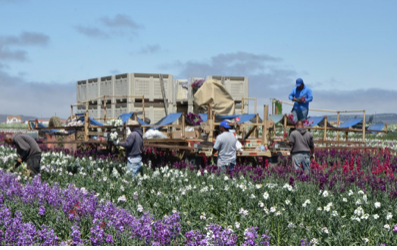 Lompoc-based Ocean View Flowers, which produced 40 million stems only two years ago wont be operating anymore. Their parent company, Santa Barbara Farms, closed the flower operation permanently. So says California Cut Flower Commission CEO Dave Pruitt.
California is America’s leading producer of high-quality cut flowers and greens – supplying over 75 percent of all domestically grown cut flowers in the United States. Foreign imports have devastated the industry and now COVID has brought some Central California operations to ruin. Pot farms have taken their greenhouse space as well.
“America’s flower farmers, the floral industry and all of their employees are teetering on economic devastation” said Pruitt. “These people literally cannot hold on without support from consumers. We urge our fellow Americans to please consider purchasing fresh American Grown Flowers and Greens the next time you’re in the store, and ask for our flowers to be added back into the distribution pipeline as a valued agricultural commodity.”
There was some success during the recent Mother’s Day holiday.
MORNING STAR PICKS UP OLAM GROWERS
Assures industry of capacity to handle the crop
With Olam Tomatoes, one of California largest tomato processors -gone from the scene in 2020, the world’s largest player – Morning Star – has stepped in to work with growers in Fresno and Kings counties to provide a home for their summer tomato crop.
“We’ve signed up some of the Olam growers” confirms owner of Morning Star Chris Rufer.
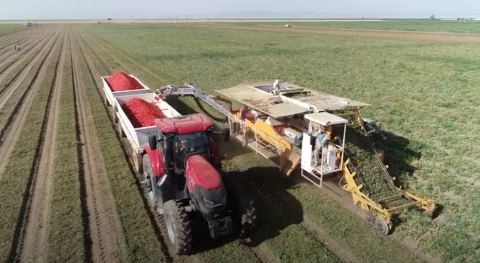 About 10% of the the state’s processing capacity has been lost with the closure of the Olam plants. Olam Tomatoes, based in Singapore, announced the closure of plants in Lemoore and Williams that together had a capacity of nearly 700 tons per hour.That compares to Morning Star’s per hour capacity of over 2000 tons.
Morning Star, based in Los Banos, operates three factories with the largest production scale in the world suppling over 40 percent of national markets with ingredient tomato paste and diced tomatoes. Morning Star is adding new capacity at its Santa Nella plant – doubling its volume.They also have plants in Williams and Los Banos.
Looking to assure the industry they can handle the volume Morning Star recently sent out a release saying “these past two years have brought our industry two supply obstacles – Olam shutting down its industrial operations and COVID-19. Many question if processors will be able to meet demand under these conditions. Morning Star answers back with: “We built our factories to sustain us through unexpected events such as this. We have the capacity to drastically increase production and through our vertically integrated enterprises, the reach to ensure all pieces of the supply chain are properly coordinated to sustain this increase in capacity and product demand.”
Olam’s California plants had been the 7th largest tomato processor in the world according to Tomato News. Olam filed a state required WARN notice November 16. The Lemoore Kings County facility employed 230.The property is for sale but will not run this year.In October Olam announced layoffs of 102 in Woodland and 102 in Williams California – each to close by mid-December, just in time for the holidays.
California as a whole produces 96% of the total U.S. processed tomatoes and represents 1/3rd of the global market
The world ranking show Morning Star with daily capacity to process 59 million tons with Olam plants at at 22 million tons.
USDA reports that as of January 2020, California’s tomato processors reported they have, or will have, contracts for 12.0 million tons in 2020, which is an increase of 4.3 percent compared to what was reported under contract in the August 2019 California processing Tomato Report. Processors estimate that the contracted production for 2020 will come from 235,000 acres, generating an average yield of 51.1 tons per acre. The contracted planted acreage forecast is unchanged from the 2019 acreage reported under contract in August.
The price for tomato paste has decline over the decades from over $2 a pound in the 1970s to $1 in 1989 an under 40 cents a pound by 2019.
Earlier last year President of the California Tomato Growers Mike Montna said growers were suffering from higher costs and low prices due to a surplus of product and the high value of the dollar.
Helping to push the higher volume is the productivity of the California grower. Their yield per acre has increased more than 8-fold since the 1920s from 10 tons per acre to 50 tons per acre today.
Fresno County remains the top producer in the state harvesting over a third of the crop on 77,000 acre as of 2019 .King County is also ranked high at 26,000 acres.Harvest is expected to begin mid-July.