
-May 1,2020-
Help for dairy industry
from WUD
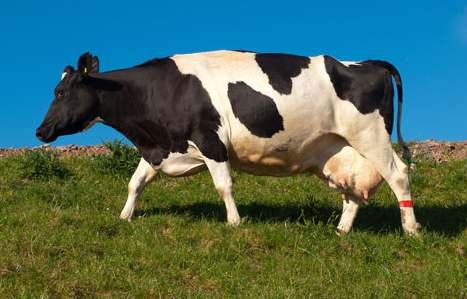 Congressman Jim Costa worked on a proposal this week to assist the California dairy industry through the coronavirus crisis. The plan is very much in line with what IDFA/NMPF submitted to USDA a few weeks ago, and what WUD, CDC and MPC supported. The key component of Congressman Costa’s effort is to remove the cap of $125,000 per commodity. The second is to focus on a at direct payment of $3/cwt for dairies who demonstrate a reduction on in milk marketings of 10% from March 2020’s volume. The last focal point is to enhance the volumes of dairy products being purchased by USDA for distribution on to food banks and other feeding programs.
In a letter of support California cooperatives and trade groups wrote “Due to the perishability of raw milk, this sudden collapse in market demand leaves the industry with two sobering choices: (1) convert the milk into soaring inventories of storable, manufactured dairy products that will overhang the market for months (or even years) to come, extend- ing this industry crisis well into the future; or (2) dispose of the raw milk at a total loss to the farmers. The industry – both at the farmer and processor level – has come together in unprecedented fashion to explore alternative paths, including common sense proposals to both incentivize temporary reductions ons in on-farm production of milk and distribute built up inventories of excess products to food banks and other nonprofit feeding programs. “
Dry milk powder price slumps
from WUD
The past week USDA’s nonfat dry milk price lost 4.64 cents, to $0.8851/lb. CME prices, sadly, also continued their decline, losing 2 cents to $0.8050/lb. The unpleasant trend is also observed abroad. Ac- cording to DMN’s survey, the average skim milk powder price in Oceana dropped 11 cents in the last month. S ll, the price stands higher than ours at $1.12/lb. Europe is doing quite as well, losing 5 cents in the last month to $0.80/lb.
General Mills plans to close its Carson, Calif., yogurt manufacturing facility in the third quarter of fiscal 2020 as part of a broader set of restructuring actions approved by the Minneapolis-based company. Established in 1979, the Carson facility makes Yoplait and Mountain High yogurt products.
Dairy Farmers of America, the nation’s largest milk producer cooperative, has estimated as much as 8% of US daily milk output was being dumped in recent weeks.
Lowest price since 2009
The Class 4 #milk base price paid to #dairy farmers in April is $11.40 cwt. That is the lowest Class 4 price since Sept. 2009 at $11.15 cwt. The last time the Class 4 price was this low was in 2009 when it was $9.82.
Low milk price & surplus volume lead to increase in cattle slaughter
With the significant price drop coming to milk checks in April, and the request by many processors to curb milk production, it is not surprising to see that cattle slaughter was up in recent
weeks. In particular for Region 9 (which includes California, Arizona, Nevada and Hawaii), dairy cattle slaughter in the last few weeks was up an average of 26% year-over- year.
Raisins get low marks in pesticide survey
A twist to this year’s report from the Environmental Working Group is that it does no involve fresh produce. Rather it is focused on a dried fruit this year: raisins.
Of the non-organic raisins tested by the USDA 99 percent had residues of at least two pesticides, as did 91 percent of organic raisins, according to the EWG statement.
“If we included raisins in our calculations, they would be number one on the Dirty Dozen,” said EWG toxicologist Thomas Galligan. “Although raisins are a popular snack, consumers concerned about their pesticide consumption may want to consider buying fresh or frozen produce from our Clean Fifteen list instead.”
The groups’ annual report draws skepticism from the produce industry.
This year’s report says “Almost every sample of non-organic raisins tested – 99 percent – had residues of at least two pesticides. On the 2020 Dirty Dozen, raisins would rank worst of all fruits tested, including strawberries, nectarines, apples and cherries, all of which had residues of two or more pesticides on at least 90 percent of samples.”
Just the opposite of the Dirty Dozen in the ranking is what the EWG calls the “Clean Fifteen,” which were found to have the lowest amounts of pesticide residue. For example, less than 2% of conventional avocados and sweet corn had any pesticide residue.
One group which argues that pesticides do not present a significant risk to the consumer is the Alliance for Food and Farming, a California-based organization of commodity boards, major farm groups and individual growers. In a press release, the group said the list has the capacity to “invoke misplaced safety fears” and that it “causes misplaced concern about whether conventionally-grown fruits and vegetables are safe to eat.”
Visalia ag firm fined
WASHINGTON April 30, 2020 – As part of its efforts to enforce the Perishable Agricultural Commodities Act (PACA) and ensure fair trading practices within the U.S. produce industry, the U.S. Department of Agriculture (USDA) has filed an administrative complaint under the PACA against Old West Export Inc., BB #:206764 Visalia, CA.
The company, operating from California, allegedly failed to make payment promptly to five produce sellers in the amount of $1,059,875 from March 2018 through November 2018.