
-December 30,2019
Battery prices down 87%
Shanghai and London, December 3, 2019 – Battery prices, which were above $1,100 per kilowatt-hour in 2010, have fallen 87% in real terms to $156/kWh in 2019. By 2023, average prices will be close to $100/kWh, according to the latest forecast from research company BloombergNEF (BNEF).
Cost reductions in 2019 are thanks to increasing order size, growth in battery electric vehicle sales and the continued penetration of high energy density cathodes. The introduction of new pack designs and falling manufacturing costs will drive prices down in the near term.
Solar projects
SunPower announced recently that construction is underway on the Lost Hills Solar Project, a 35-megawatt DC (29-megawatt AC) system that will deliver low-carbon electricity to Chevron‘s Lost Hills oil field in Kern County, California, under a power purchase agreement.
The Lost Hills Oil Field has been a source of energy since it was discovered in 1910, producing more than 460 million barrels of oil equivalent over the past 40 years. Once complete in early 2020, the solar project is expected to provide power to the Lost Hills production and processing facilities and offices, meeting approximately 80% of its energy needs. Goldman Sachs Renewable Power (GSRP) will own the system and Chevron will receive environmental credits under the state of California’s Low Carbon Fuel Standard (LCFS) program.
In front of the Kings County Planning Commission, Apex Energy Solutions of Folsom, California is proposing the Leo Solar Project on ±30 acres of a 40-acre parcel located near 25th Avenue 15 miles south of unincorporated Kettleman City, California along the Kings County/Kern County border, between California State Route (SR) 33 and Interstate 5 (I-5), approximately 0.5 mile east of 25th Avenue.
New home solar mandate
from Bloomberg reports
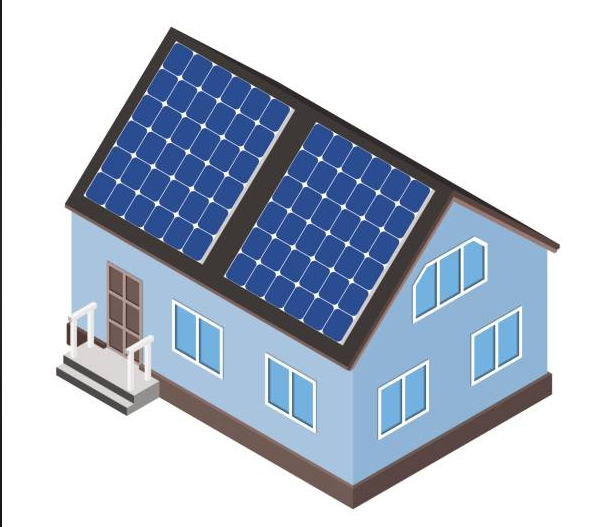 Starting in 2020, California will become the first U.S. state to require almost all new homes to draw some power from the sun. The solar mandate is part of a wide-ranging push by the world’s fifth-largest economy to combat climate change by weaning itself off fossil fuels.
California already leads the U.S. in home solar panels. Solar makes up about one-seventh of its electricity supply, and that’s expected to grow for the state to meet its goal of 100% carbon-free power by 2045. Others may follow: Massachusetts is weighing a similar mandate, as is Maryland’s Montgomery County. “California has provided the template for a lot of U.S. clean energy policy,” says Hugh Bromley, an analyst for BloombergNEF.
In California, housing affordability remains a key challenge. State regulators say adding solar panels will increase home costs by an average of $9,500, though they note that the systems’ lower energy costs will yield net savings of about $19,000 over 30 years. Only about 20% of California houses built in the past couple of years included solar panels, according to the California Building Industry Association, a trade group.