
-June 13,2019-
from press reports
The USDA Crop Progress report released June 3, 2019 showed that as of the week ending June 2, 2019 only 67% of corn has been planted, compared to 96% in 2018.
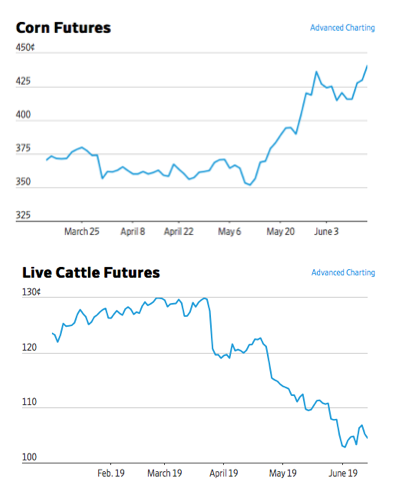
A USDA stocks report Tuesday pushed corn futures higher and the rally is continuing into late week. The government dropped 3 million acres from the expected corn national acre plantings this spring. At the same time they dropped the expected yield on this year’s crop making it more likely prices will remain well above $4 and possibly higher into the coming year.
In addition to a lower supply of corn, we will see continued decreases in high quality hay.
Rachers typically cheer that the period between Memorial Day and the Fourth of July is generally a strong period for beef consumption. A cool rainy spring has slowed beef demand and pent up interest in a beef cookout will be on a lot of minds.
But livestock farmers costs are heading higher including soybean based feed.
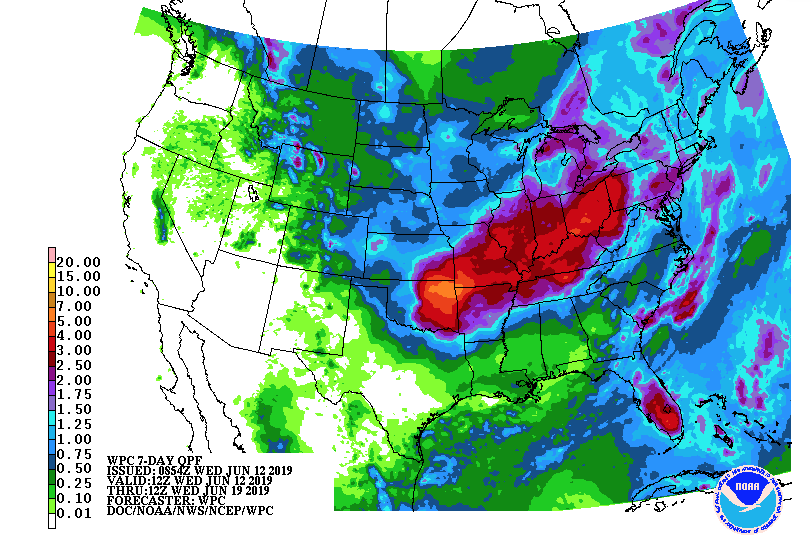
Wet weather is still impeding planting and it is too late to get it in the ground in many cases. Weather forecasts for mid June promise more soggy conditions for the Midwest corn belt. See this 7 day rain prediction map.
More press reports are talking about the problem as futures price for corn head to $4.50 a bushel ( see charts).
Some 65 percent of chicken feed is corn and corn by-products and back in 2010, 1.3 billion bushels were fed to chickens in the US.
(Bloomberg/June 12 — The prospect of tighter American corn supply is bad news for livestock and poultry farmers who feed the yellow grain to their animals.
Chicago hog futures dipped to a three-month low on Tuesday while cattle prices eased after the U.S. Department of Agriculture said historically rainy weather would lead to a smaller corn crop than previously thought.
Higher corn prices — futures rose more than 3% on Tuesday — may prompt farmers to send animals to slaughter rather than fattening them up, which will increase supplies in the short term, said Brian Hoops, senior analyst at Midwest Market Solutions in Springfield, Missouri.
“Production growth for livestock and poultry is expected to be slower as producers respond to higher feed costs,” the USDA’s World Agricultural Outlook Board said in a report. “Pork production is lowered from last month primarily as the pace of slaughter to date has been slower than expected.”
The USDA outlook contributed to the drop in hog futures, after prices surged on Monday, according to Craig VanDyke, risk management consultant at Top Third Ag Marketing. “They are not going to be willing to pay up both for feeder pigs and feeder calves” because the cost grains will be an even bigger problem, he said by phone.
One beneficiary in the tightening corn outlook is wheat says the Bloomberg report. The government said more wheat would be used as animal feed, which might help draw down U.S. stocks.