
-March 18,2019-
Tulare County has some 10,600 acres of olives in the county as of 2017 but now stands to lose nearly 4,500 acres, nearly half the acres due to last minute contract cancelations by one company.
 Tulare County Farm Bureau released as statement March 15 expressing their concern and asking both the federal and state government for action.
“In Tulare County approximately 4,500 acres of olives will be impacted by this action, prompted by the announcement that a European conglomerate, Dcoop, has acquired a 20% ownership interest in Bell-Carter Foods (last August). The company will be shipping cheaper grown Spanish and Argentine olives into the US for processing under a loophole that will allow the company to avoid paying tariffs on their imported raw unprocessed olives.”
Loss of the olive crop will also impact an estimated 1500 olive pickers who count on the work in the fall months says the county farm bureau. “These are highly skilled workers that will lose some of their most lucrative earning opportunity with this acreage going out of production,” says olive grower Bill Ferry.
While there is one other major table olive processor in California, Music Family Olive Co. is not able at this time to ensure that all of this contracted acreage could be processed in their facilities. Until it is known, the displaced growers face great financial uncertainty.
The March 15 TCFB statement says “Olive growers also have less than one week to determine if they will renew their crop insurance for the 2019-20 growing season. It would be difficult to incur the expense for crop insurance for a crop they cannot sell.”
In 2018 at the urging of the California industry, the federal government slapped a 37.5% tariff on foreign black olives. So the Spanish company with Bell Carter brought in unfinished black olives, skirting the tariff, in turn displacing California growers”
Bell-Carter has terminated “many” of its table olive purchasing contracts with California growers, according to Tim T. Carter, the company CEO.
“This termination is effective immediately and we will not receive your harvest in 2019,” Carter wrote in a letter to growers from the company office in Exeter.”The decision has been extremely difficult for us, many of our grower partners dating back three generations.”
Carter continues “Bell-Carter competes in a global marketplace as a canner and marketer of table olives,” he said. “Unfortunately, due to rising cost increases for California olives, Bell-Carter made the necessary but difficult decision to release many California grower contracts.”
It’s not just Tulare County olive growers that are affected. Farmers from the Corning area have also lost contracts.“Look for a lot of olive trees coming out,” a local grower recently told the Corning newspaper. “Corning used to be one of the biggest olive producers around. It’s awful.”
Tulare County has its own history as the heart of the California olive industry with more than 15,000 acres in production in the 1990s, many groves located along the foothills where the citrus orchards are also located. Now with more olives coming out, the industry could have just a third that 1990 number of acres.
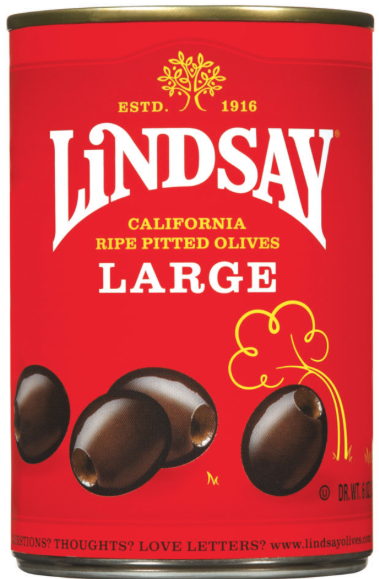 Tulare County was the birthplace the famous Lindsay Olive brand (from Lindsay of course) now owned by the Bell Carter company. A local co-op,Lindsay Olive’s landmark plant closed in 1992 wiping out 500 jobs as Bell Carter bough only the name, not the facility. Also closing was Visalia’s Early California Foods processing plant, leaving the county without any processor/canner and only two left in the state.
With this latest decision by Bell Carter, many local growers are left without a home for their olives.
Back story of a changing industry
According to a UC Davis study, the industry continues to change. Prior to 1900, the California olive industry focused on oil production. However, because California oil producers could not compete with cheaper European products, the industry switched focus to pickled table olives. The “California black-ripe” curing method was developed in 1905. By 1910 canned black-ripe olives had become the major California olive product, with the center of production in Tulare County. A small proportion of olives, normally those too small to can, were used for oil.
In the mid-1990s, a Spanish nursery pioneered a “super-high density” (SHD) system, where trees are grown in hedgerows at densities >600 trees/acre. Harvesting is completely mechanized using over-the-row equipment. These SHD systems are expensive to establish but the trees reach full production within four or five years, and are much cheaper to harvest. However, SHD systems are currently only well-adapted for three oil varieties, no the variety used here for ripe olives.The first California SHD orchard was planted in 1998. Today, most new California oil-olive plantings are in SHD systems .
The US produces less than 1% of the world’s olives. The major producer is Spain, followed by Italy and Greece. California is the only important olive growing state in the US.
Most table olives are grown in lower-density orchards, while oil olive orchards now mostly favor SHD systems. Some of both types are also grown in HD systems.
California olive oil has become better positioned to compete with imported oils. Oil olive orchards also have a relatively low water requirement of about 2 acre-feet per year. Production has been rising steadily. Meanwhile, because of high labor and water costs and falling prices, table olives have become less profitable, and many orchards are being removed in favor of higher value crops like almonds or citrus .
As a result, in 2015 about 60% of California’s olive production was for oil, up from an average of about 4% prior to 2000.
The 2018 olive crop around the world had a tough year due to a number of factors including extreme weather. Olives are an alternative bearing crop amplifying the trend toward boom and bust.
Italy has been hard hit, in part by insects pressure and climate issues. The London Times reported that Italy will run out of olive oil by April. Italian farming lobby Coldiretti said that the domestic olive harvest last fall dropped 57% to 185,000 tons, a 25-year low. The California Olive Oil Council estimated that here, producers would end up with 2.8 million gallons of extra virgin olive oil in 2018, a 30% decrease from the previous year.