
Waiting for trade breakthrough?
“Don’t Hold Your breath” says Valley ag trade group
October 29,2018-
California’s most important citrus sales period is just starting for the holidays. But the outlook for better prices is clouded by the lingering trade war with our key export partners.
Tops on the list is China.This past week the trade group California Citrus Mutual weighed on prospects for any breakthrough in the 8 month face off. Here is what they told growers recently. The upshot is that they fear the “red ink” will continue to flow.
UPDATE:
“China has quietly closed a perceived loophole in trade onto the mainland by cracking down on almonds transshipped via Vietnam. This was being done to avoid the horrendous tariffs imposed. While California citrus has rarely transshipped from Vietnam, the Hong Kong distribution channel could be affected if the objective is to make the tariffs as a whole as effective as possible.

Regarding possible elimination and an agreement between the two nations; don’t hold your breath.
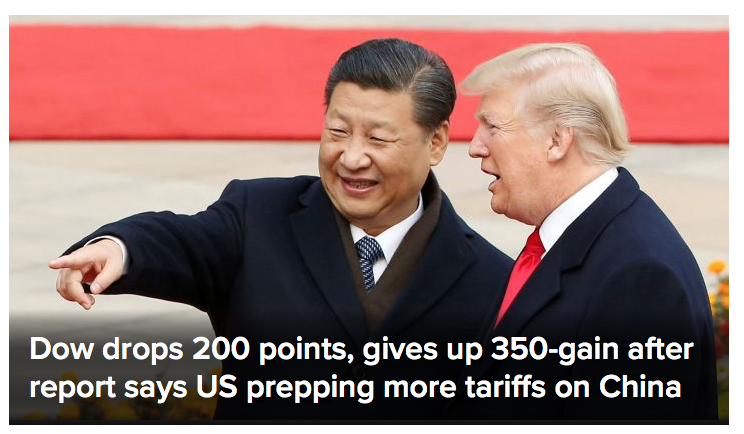
The Chinese are seeking a long, drawn-out bureaucratic review via the World Trade Organization (WTO) as to the legality of U.S. actions on Chinese products. In November there is a major national trade session scheduled with the nation’s two leaders scheduling some “sidebar” time. U.S. interests continue to focus on U.S. companies being forced to give up technology, being forced to accept partnerships, and being forced to compete against subsidized Chinese companies. We wouldn’t anticipate any breakthrough just yet.”
CCM says that in 2017, the amount of California citrus exported to China was 7.868 million cartons of oranges and lemons. The previous season the number was higher. When the trade dispute broke, the citrus industry exported 13,333 metric tons in May of last years crop, compared to 27,072 metric tons in May of 2016, down be more than half.
Peak Export Month
December through May is historically the peak export months into China with major arrivals occurring in December after being loaded in November. “Finding a new home for that much tonnage or selling it for less to offset the 50% tariffs are not outcomes that generate the net revenue per acre for the grower” says CCM memo.
The value of the fruit is approximately $250 million.
Tulare County farmer Guy Wollenman told CNN a few days ago that trade war was hurting their long time family farm near Lindsay. The Wollenmans have grown citrus in California since 1919.
”We have two bad years with this trade war and I don’t know if we can weather that.” His brother Tom figures the tariffs are costing them $2000 an acre.
CCM’s president Joel Nelsen wonders when this trade dispute will be resolved suggesting right now that “supply exceeds demand” for our citrus and worries farmers “will end up with a red ink year.”
It does not help that in addition to the tariff squeeze the industry faces a larger crop but smaller in fruit size this year.
California citrus industry, already the number two crop in the Central Valley, affects other sectors of the economy in California. For example, California’s large food and beverage manufacturing industry is located in the state largely because California’s farms produce so much. That industry employs more than 234,000 people and generates $15.7 billion in employment earnings. This compares to farm employment of 241,000 and earnings of $15.9 billion Other industries are also dependent on agriculture, including those that provide agricultural inputs and that transport farm production and food products made from California farm production.
Recently a California economics analyst weighed in on the impact of the trade war.
“When President Trump imposed higher tariffs on imported steel and aluminum earlier this year, America’s trading partners retaliated with tariffs that disproportionately targeted agricultural exports, including California fruits, nuts, dairy products, and wines,” said Jock O’Connell, Beacon Economics’ International Trade Advisor. “So it comes as no surprise that our once vibrant agricultural export trade has suffered, while the state’s high-tech manufacturing sector continues to thrive.”
Likewise for other trade partners.Even with preliminary US trade agreement with Canada and Mexico, retaliatory tariffs are still in place over Trumps steel and aluminum tariffs.
The retaliatory tariffs imposed by Mexico and Canada against U.S. products in response to U.S. tariffs on imports of steel and aluminum from Mexico and Canada will remain in place. Secretary of Commerce Wilbur Ross tells Fox Business, “There are problems specific to steel and aluminum relating to our national defense, and at this point of time, those stay the same.”
US orange products remain affected by retaliatory tariffs not just from China but those imposed by Canada,Europe and Turkey. Mexico’s big impact includes the tax they continue to put on our other big crop – cheese. Mexico says it is up to Mr Trump to drop the steel tariffs before they will sign the new trade agreement. Dairy farmers are asking him to do just that.